01
Idea
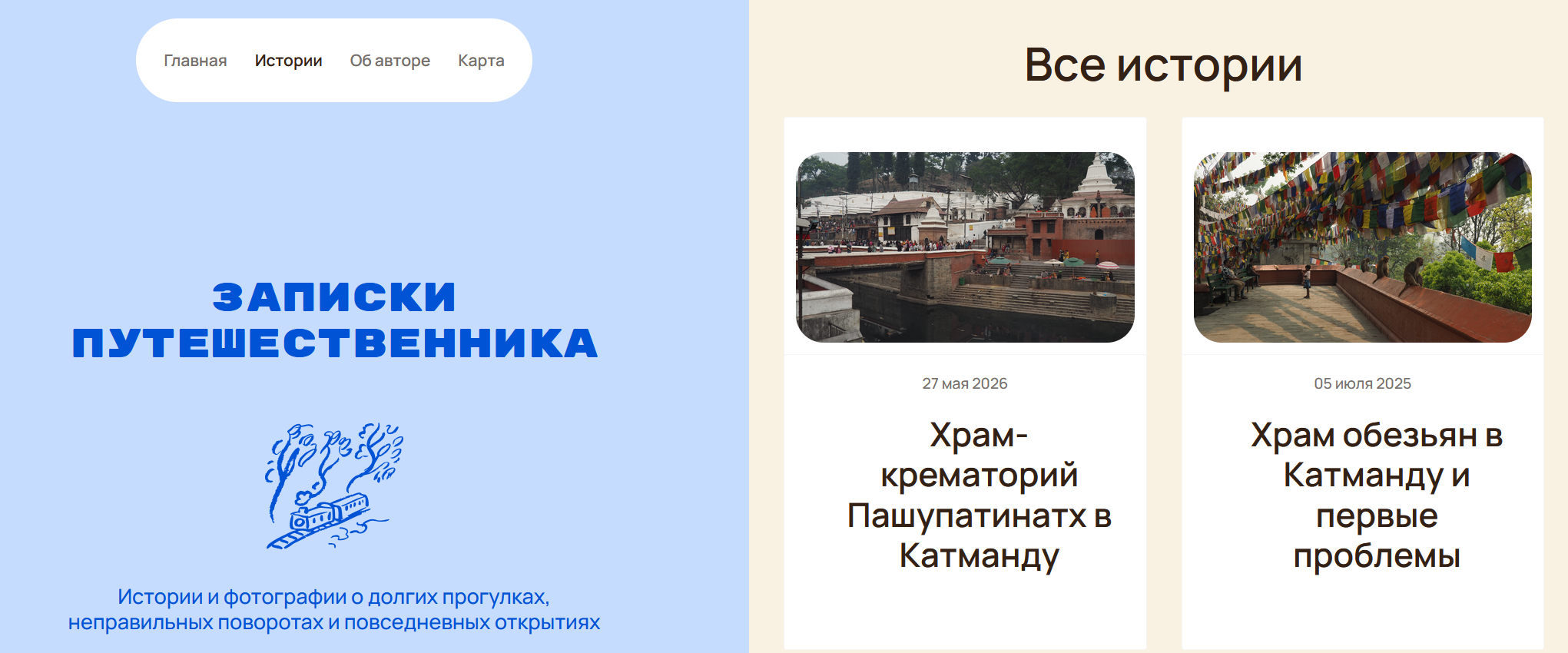
This is a personal travel blog where I publish notes from my trips. The project started as a regular CMS website but gradually became the foundation for a more complex technical ecosystem.
An important feature is that the content is not only displayed on the website: the data is also used by other personal projects, especially the travel map.
02
Why Joomla
Joomla was chosen as the CMS for managing content and publications. For a travel blog, this made it possible to focus on content while delegating routine administration to an established CMS.
JoomlaPHPMySQL
03
Working with Data
The Joomla database stores the blog content. Later, this data became the source for the Laravel API, which selects the required records and prepares them for the map.
As a result, the CMS remains the main place for content management, while new applications use its data without requiring a separate administration panel.
04
Project Evolution
The blog gradually evolved into a broader experiment with the architecture of custom services. It led to a separate Laravel API and a Vue/MapLibre interface.
Project flow: Joomla stores content → Laravel provides data → Vue displays it in an interactive interface.
05
Development Experience
Working with Joomla provided practical experience with PHP, CMS architecture, extensions, databases, and integrating an existing project with a modern frontend/backend stack.
It was especially useful to gradually move from development inside a CMS to an independent API and a separate frontend application.
06
Result
The blog continues to serve as the main platform for publishing travel stories, while its data has become the foundation for a separate interactive map project.